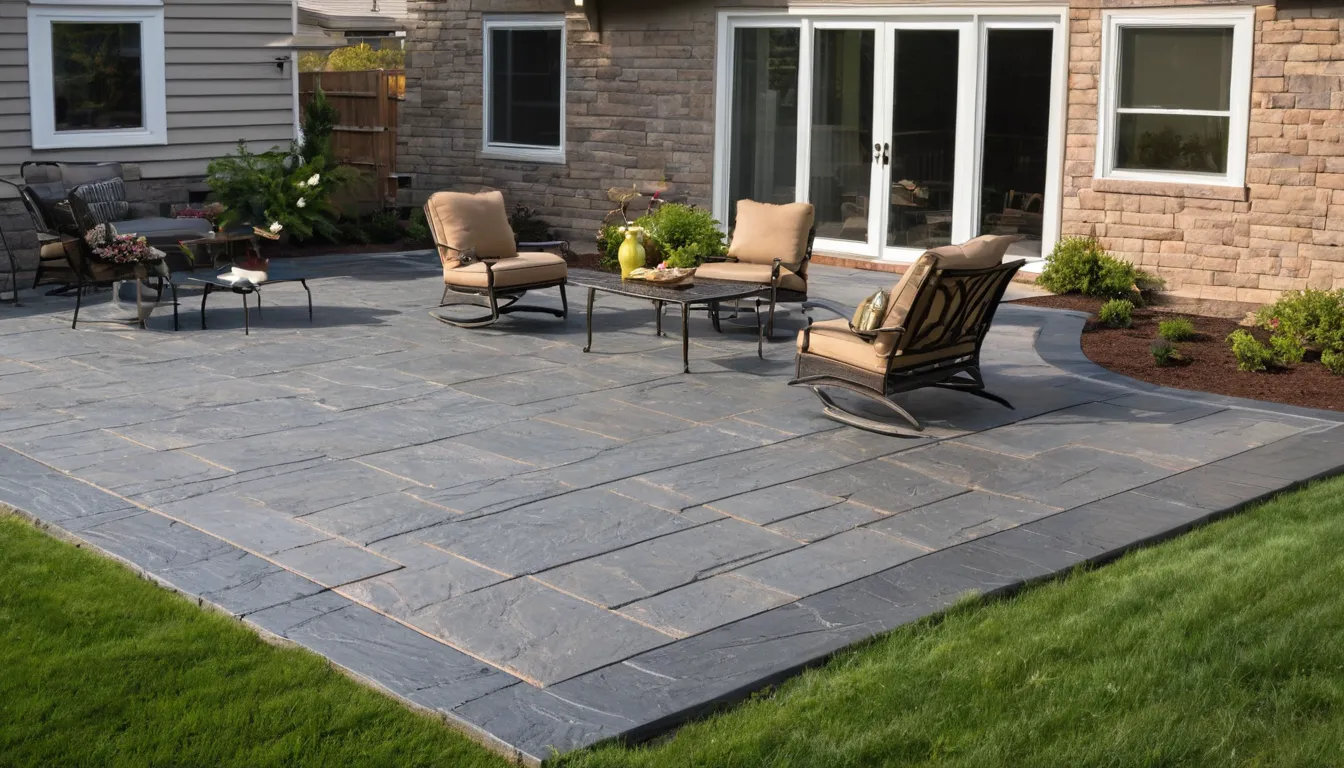
Stamped concrete gives a poured slab the look of stone, brick or wood, without laying thousands of separate pieces. If your current patio or walkway is cracking, flaking or sinking, treat that as the cue to start planning. Replacing a worn slab early is usually simpler than waiting for it to fail.
Danceindicated Concrete is a referral service. It connects homeowners in Green and the Green area with independent local providers who pour and finish the work. Danceindicated Concrete does not do the work itself. You compare written quotes, ask questions and decide on your own schedule, with no obligation to hire anyone.
Stamped Concrete in Plain Terms
Stamped concrete is a poured slab pressed with patterns while it is still soft. The finished surface can look like stone, brick, slate or wood. It is one solid surface, not hundreds of loose pieces.
This page starts with the warning signs on your current slab. Those signs tell you when to plan.
Read the Slab: Early Warning Signs
Cracks That Keep Growing
A hairline crack is common. A crack that widens, branches or leaves one side higher than the other is moving. In cold climates, deep frost is a frequent cause.
Scaling and Flaking
A peeling surface means water soaked in and froze. De-icing salt makes it worse. Scaling spreads, so it rarely stays small.
Sunken or Tilted Sections
A slab that slopes toward the house sends runoff to the foundation. With a basement and sump pump, that extra water adds load.
Puddles After Storms
Water that sits after a thunderstorm or spring flood has nowhere to go. Poor slope is the usual reason. A new pour can correct the grade.
Seeing one of these? Request a callback to check provider availability.
Check the Ground First
A new surface is only as sound as the soil under it. If a slab sank because of washout or a settling wall, have foundation repair experts look at the cause first. Stamped concrete over moving ground will crack again.
A provider can tell you if regrading or a thicker base is needed. That is a normal part of concrete flatwork, not an upsell.
How Stamped Concrete Is Made
Base and Forms
The provider excavates, lays compacted gravel, sets forms and often adds rebar or mesh. This step decides how long the slab lasts.
Color and Texture
Color goes in as an integral mix, a surface hardener, or both. A release agent keeps the stamps from sticking. Workers press mats into the wet surface, then texture the edges by hand.
Cure and Seal
Control joints are cut to guide where cracks form. The slab cures for days, then gets a sealer for color and stain protection.
Popular Patterns and Colors
Ashlar slate, random stone, brick herringbone and wood plank are common picks. Earth tones such as tan, gray and charcoal hide dust and weathering. A darker border adds depth. Ask to see samples outdoors, since color shifts in daylight.
Where Stamped Concrete Works Well
Stamped concrete patios are the usual choice. The same method suits walkways, pool decks and porch landings. Bungalows and ranch homes often pair well with brick or flagstone looks. Older frame houses can carry slate or cobble.
On shaded spots, ask about a slip-resistant sealer. A wet stamped surface can be slick.
Stamped Concrete vs. Pavers
Pavers can be lifted and replaced one at a time. They also shift, sink and grow weeds in the joints, especially after hard frost. Stamped concrete has fewer joints and sweeps clean. Its weak point is cracking, and a cracked section is hard to hide.
Neither is wrong. Match the choice to your soil, budget and how much upkeep you want.
Compare, Then Decide
Get more than one written quote. Check that each lists slab thickness, base depth, reinforcement, pattern, color, sealer and removal of the old slab. Quotes that look different often leave out different items.
Take your time. You are under no obligation to accept any quote.
How Long the Job Takes
Most projects run one to two weeks, including demolition, prep, pour and finishing. Rain, hail or a hard frost can push the date. Plan ahead, because providers book up as the season turns.
Expect foot traffic after a couple of days. Vehicles need a week or more, and full strength takes about four weeks.
Caring for Stamped Concrete
Sweep and rinse regularly. Reseal every two to three years, or when water stops beading. Use plastic shovels and a concrete-safe de-icer in winter. Rock salt and some fertilizers can damage the surface.
Fix new hairline cracks early with a sealant. Wider movement is a cue to ask a provider to look.
Choosing a Stamped Concrete Provider
Ask to see finished work that is a few years old. Fresh jobs always look good. Older ones show how the color and joints held up.
Confirm the provider carries the insurance and any local licensing your area requires. Ask who does the finishing and how they handle rain delays. Get warranty terms in writing.
Ready to compare options? Request a callback to check provider availability, or send a request.
What's Included
Pattern Choices
Stone, brick, slate and wood looks pressed into one continuous poured surface.
Color and Sealer Options
Integral color, stain and a protective sealer, matched to your home and sunlight.
Base and Reinforcement
Compacted gravel, rebar or mesh and control joints suited to local frost and soil.
Old Slab Removal
Demolition and haul-off of a cracked slab, often listed as a separate line.
Typical Stamped Concrete Costs
These are typical U.S. ranges. Real prices vary with size, soil, pattern, color and access. Compare written quotes that list every line, so you can see what each one includes.
| Item | Typical range | Notes |
|---|---|---|
| Basic stamped patio | $8 – $18 per sq ft | One color, one pattern |
| Multi-color or border work | $12 – $25 per sq ft | More labor and release colors |
| Stamped driveway | $10 – $22 per sq ft | Thicker slab with reinforcement |
| Old slab removal | $2 – $6 per sq ft | Haul-off can add cost |
| Base prep and grading | $1 – $4 per sq ft | Poor soil raises the price |
| Sealer, initial coat | $1 – $3 per sq ft | Resealing needed every few years |
How It Works
Read Your Slab
Note cracks, flaking, tilt and puddles, then decide whether the old surface is ready to be replaced.
Call or Request
Request a callback or send the request form with your project size and goals.
Compare Written Quotes
A local provider reviews the site and sends a written quote. Line up the details.
Choose and Schedule
Pick the provider you trust, confirm the timeline and prepare the site.
Why Call Danceindicated Concrete
Compare, Then Decide
Review written quotes side by side and take the time you need.
Independent Providers
Local concrete pros do the work. The referral service does not.
Plan Early
Spot slab warning signs now and schedule before a bigger failure.
No Obligation
Requesting an estimate commits you to nothing. The decision stays yours.
Other Services
Need stamped concrete in Green?
Planning a new driveway or patio? Request a callback to check provider availability, or request an estimate. No obligation.
No obligationStamped Concrete FAQ
How long does a stamped concrete patio last?
With solid base prep, control joints and regular resealing, stamped concrete can last for decades. Deep frost, de-icing salt and poor drainage shorten that, so ask providers how they handle local conditions.
Is stamped concrete slippery when it is wet?
It can be, especially glossy sealers on shaded or sloped areas. Ask the provider about a slip-resistant additive in the sealer. Texture patterns such as slate or stone also give better grip than smooth finishes. Request samples to compare before choosing.
Does stamped concrete crack, and can the cracks be hidden?
Any concrete can crack. Control joints guide where it happens, and good base prep reduces movement. Hairline cracks can often be sealed, though a patch may stay slightly visible against the color.
Reach a local provider
Planning a new driveway or patio? Request a callback to check provider availability, or request an estimate. No obligation.
No obligation