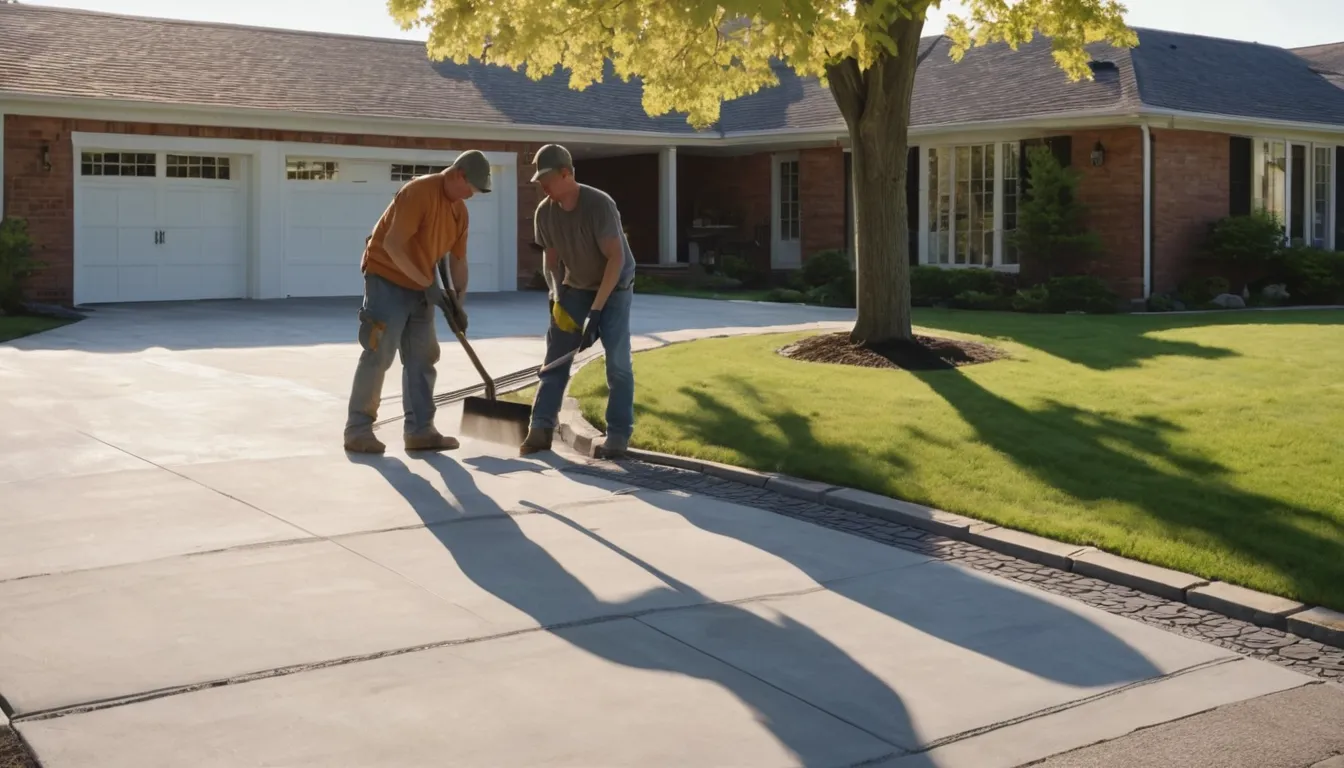
Residential Concrete Driveways in Green
A driveway rarely fails overnight. It sends signals first: hairline cracks, a dip near the garage, flaking on the surface, or puddles that never drain. Reading those signs early gives you time to plan a new slab on your terms.
Danceindicated Concrete is a referral service for homeowners in Green and the Green area. We connect you with independent local concrete providers. They inspect the site, explain their approach, and give written quotes. Danceindicated Concrete does not pour or repair concrete. You compare the quotes, ask questions, and decide with no obligation.
Read the Slab Before It Fails
Concrete gives warnings. Most homeowners see them and wait. That wait is what turns a planned project into a rushed one.
This page explains what to look for, what a new driveway involves, and how to compare providers without pressure.
Early Warning Signs to Watch
Walk the driveway once a season. Look for these:
- Cracks wider than a pencil line, or cracks with one side higher than the other
- Sections that sag or tilt toward the garage or house
- Flaking, pitted, or sandy-looking surface
- Standing water that stays long after rain
- Gaps opening at joints or along the garage slab
Cracks That Move
A stable hairline crack is common. A crack that widens or steps up is different. It means the ground under the slab is shifting.
Settling and Trapped Water
Soil washes out or compresses under the slab. Water then pools in the low spot and speeds up the damage.
Surface Scaling
Scaling is the top layer peeling away. Deicing salt and repeated frost cycles are the usual causes. Once it spreads across most of the slab, patching rarely lasts.
Repair or Replace?
Concrete driveway repair makes sense for a few isolated cracks on a sound base. Patching, sealing, or jacking a single panel can buy time.
Replacement is the better plan when damage covers most of the surface, panels have settled in several places, or the base has failed. Repeated patching on a failing base costs more over time. Ask each provider to explain which path fits your slab.
Why Local Weather Is Hard on Concrete
Deep winter frost pushes the ground up and lets it drop back. Spring runoff softens the soil. Hot, humid summers and hard storms add more stress. A driveway here needs a well-built base, proper drainage, and sound joints.
What a New Driveway Project Includes
A complete job usually covers these steps:
- Marking the layout and removing the old slab
- Excavating and grading the subgrade
- Compacting a gravel base
- Setting forms and steel reinforcement
- Pouring, finishing, and cutting control joints
- Curing, then cleanup
The base matters as much as the concrete. Concrete flatwork is only as stable as the ground under it.
Size, Thickness and Finish
Measure how you actually use the space. Think about two cars, guests, and turning room. A wider slab costs more but is easier to live with.
Most residential driveways are poured about four inches thick. Heavier vehicles may call for five or more. Reinforcement with rebar or wire mesh helps hold cracks tight.
For finish, a broom texture gives grip when wet. Exposed aggregate and color cost more. Ask to see samples poured locally.
Permits and the Street Apron
The apron is the section where your driveway meets the street. It often sits in the public right-of-way. Many towns require a permit and set their own rules for width, slope, and thickness.
Providers usually know local requirements. Ask who pulls the permit and whether it is in the quote.
When to Schedule
Concrete needs mild temperatures to cure well. Spring through early fall is the usual window, and busy months fill up. Planning early gives you better choices. Request a callback to check provider availability for your season.
Compare, Then Decide
Get more than one written quote. Put them side by side and compare the same items: demolition, base depth, thickness, reinforcement, joints, finish, and cleanup.
A low number can hide a thin base. A high number may include extras you do not need. You are never required to accept a quote.
What to Ask Each Provider
- How deep will the gravel base be?
- What thickness and reinforcement are in the price?
- Who handles the permit and the apron?
- How long before I can walk and drive on it?
- What is the workmanship warranty, in writing?
After the Pour
Keep foot traffic off for a day or two and vehicles off for about a week, or as your provider advises. New concrete keeps gaining strength for weeks.
Seal the surface when the provider recommends it. Go easy on deicing salt the first winter. Shovel instead.
Keep Water Away From the House
A driveway should slope away from the garage and foundation. If you notice water running toward the house or new cracks in basement walls, ask a specialist such as foundation repair experts to look at it separately. Sort out drainage before you pour new concrete.
What's Included
Demolition and Haul-Away
Providers break out the old slab and remove it so the new base starts clean.
Base and Grading
Compacted gravel and correct slope help the slab drain and resist frost.
Reinforced Pour
Rebar or mesh, control joints, and a finish chosen to suit your climate.
Curing and Cleanup
Proper curing time, site cleanup, and clear guidance on when to drive.
Typical Driveway Cost Ranges in the U.S.
These are general U.S. ranges. Your price depends on size, access, soil, and finish. Always get a written quote from each provider.
| Item | Typical range | Notes |
|---|---|---|
| Standard broom-finish slab | $6 – $12 per sq ft | Four inches thick, basic reinforcement |
| Two-car driveway (about 400 sq ft) | $3,500 – $7,000 | Varies widely by region and layout |
| Old slab removal and haul-away | $1 – $3 per sq ft | Higher for thick or reinforced concrete |
| Base prep and grading | $1 – $3 per sq ft | Poor soil or slope adds cost |
| Exposed aggregate or color | $2 – $6 per sq ft extra | Added to the base slab price |
| Permit and street apron work | $100 – $1,500 | Depends on local rules and apron size |
How It Works
Read the Slab
Note cracks, dips, scaling, and standing water so you can describe the problem clearly.
Call or Request an Estimate
Request a callback or use the form, and share your address, size, and timing.
Compare Written Quotes
Independent providers inspect the site and send quotes you can line up item by item.
Decide and Schedule
Choose the provider you trust, confirm the details in writing, and set a start date.
Why Call Danceindicated Concrete
Plan Before Failure
Acting on early signs gives you time to compare quotes instead of choosing under pressure.
Local Providers
Independent providers in our network know frost depth, drainage, and local permit habits.
Written Quotes
Compare scope, base depth, and finish side by side before you pick anyone.
No Pressure
Requesting an estimate carries no obligation. You make the final call.
Other Services
Need residential concrete driveways in Green?
Planning a new driveway or patio? Request a callback to check provider availability, or request an estimate. No obligation.
No obligationResidential Concrete Driveways FAQ
How do I know if my concrete driveway needs replacing?
Look for wide or uneven cracks, sunken panels, widespread surface flaking, and pooling water. Isolated cracks can often be repaired. When damage covers most of the slab, providers will usually recommend replacement.
How thick should a new concrete driveway be?
Most residential driveways are about four inches thick. Heavier vehicles or weak soil may call for five inches or more, plus reinforcement. Ask each provider to put thickness and base depth in the written quote.
How long before I can drive on a new concrete driveway?
Foot traffic is often fine after a day or two. Cars usually wait about a week, and heavy trucks longer. Your provider will give specific timing based on weather and the mix used.
Reach a local provider
Planning a new driveway or patio? Request a callback to check provider availability, or request an estimate. No obligation.
No obligation